When Kristin Jones graduated from high school, she wasn't sure what came next.
Unlike many of her friends who seemed to have their futures mapped out, Kristin wasn't ready to move away from home or commit to a four-year university. She knew higher education was important, but she also knew she needed time to figure out who she was and what direction felt right.
"I didn't feel like I was in the same space as friends who were completely prepared to go off to their four-year university," Kristin recalled. "It felt like they had this specific plan in mind, and I didn't. I had no idea what I was going to do."
Normandale Community College provided exactly what she needed: an opportunity to begin her college journey without having all the answers.
"I knew I could get some of those general education credits done less expensively," she said. "I wasn't prepared to move away from home, be financially on my own, or have that specific route in mind that a lot of my friends had."
What started as a practical decision became the foundation for a meaningful and impactful career.
While Kristin found support at Normandale, she admits she wasn't fully ready to take advantage of everything available to her at the time. "The supports were there," she said. "I had supportive instructors. I had people checking in. But I wasn't in a headspace to really access them." Now, with the benefit of experience, she sees things differently.
If she could go back and give advice to her 18-year-old self, it would be to lean into relationships with faculty members who genuinely care about student success.
"There were instructors who stood out to me because they were engaged and compassionate about what they were doing," she said. "What I wish I would have known then is that their engagement with me was because they wanted me to succeed."
Rather than viewing professors as authority figures giving assignments and enforcing deadlines, she now recognizes them as mentors willing to help students navigate uncertainty. "I wish I would have connected with one or two of them more personally," she said. "Maybe had a mentor or someone to help me get to that place because I was really kind of flailing."
It's a lesson she hopes current students take to heart.
"Reach out. Ask questions. Stay after class. Those connections can be incredibly valuable." At the time, Kristin didn't realize that some of her favorite classes were quietly pointing her toward her future. She found herself genuinely engaged in courses like psychology, sociology, and anthropology.
"I took intro to psychology, anthropology, and sociology, and I loved them," she said. "Those were the instructors I really wish I would have gotten to know more personally." Years later, she realized those courses had been revealing something important about herself.
"Those classes were my passion," she said. "It was anything that had to do with people, people's experiences, people's struggles, and understanding human behavior." The interests she first explored at Normandale eventually led her to earn a bachelor's degree in Psychology from Metro State University and later a master's degree in Marriage and Family Therapy from Saint Mary's University of Minnesota.
"It all started at Normandale," she said. "I just didn't recognize it at the time."
Kristin's career path was anything but straightforward, and she wouldn't have it any other way.
"I feel like my career timeline is that meme where it's not a straight line across the page, but a tangled ball of yarn," she said with a laugh.
After leaving Normandale, she built a successful career at Target Corporation, where she worked for nearly a decade, advancing through multiple supervisory and management positions and traveling extensively. But eventually she reached a turning point.
To continue advancing professionally, she needed to complete her bachelor's degree. While pursuing that degree, she completed an internship at the Greater Minneapolis Crisis Nursery, an experience that reignited the passion she had first discovered in her social science courses years earlier.
"Something clicked," she said. "It reconnected me to the things I loved learning about. It felt different. I realized I wanted to be working directly with people and making a different kind of impact." That realization changed everything.
She completed her undergraduate degree, earned a master's degree in Marriage and Family Therapy, and launched a private therapy practice.
Since becoming a licensed therapist, Kristin has worked across a variety of settings, including private practice, employee assistance programs, substance use treatment, community mental health, and crisis intervention.
During the COVID-19 pandemic, she worked with Optum's Employee Assistance Program, providing crisis support and mental health services to employees across major organizations. The work was meaningful and intense, helping people navigate unprecedented stress and uncertainty.
Afterward, she joined a substance use treatment and reentry program in North Minneapolis, supporting individuals transitioning from the criminal justice system. "It was one of my favorite jobs," she said. "Very intense, very difficult work, and I loved every minute of it."
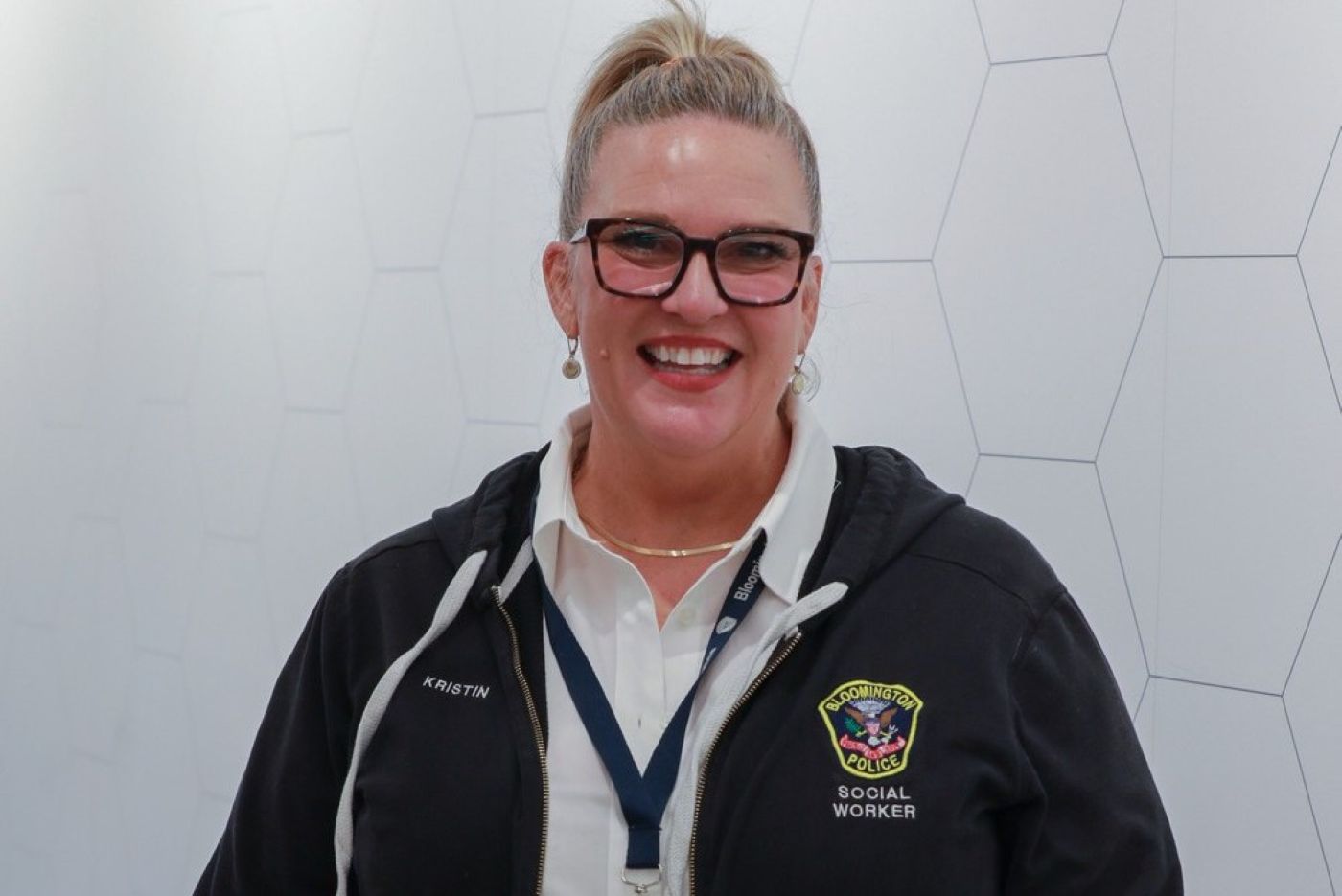
Today, Kristin serves as a Community Outreach Worker with the Bloomington Police Department, helping connect residents with resources ranging from mental health services and substance use treatment to housing assistance, medical benefits, and community support programs.
When police officers encounter residents who may need additional support, Kristin steps in to help identify resources and build connections. "Sometimes people aren't ready right away," she said. "A lot of the work is planting seeds."
She shared that there are times when someone may not be ready to accept help for months or even a year after an initial conversation.
"They'll call and say, 'I'm ready now,'" she said. "And then I'm there."
While witnessing people's struggle can be difficult, Kristin finds purpose in being a consistent source of support and hope.
Many current Normandale students may have already met Kristin without realizing she's an alumna.
Through a partnership between the Bloomington Police Department and the college, Kristin regularly returns to campus for the popular "Ask Me Anything" events.
Students can stop by to ask questions of police officers, learn about community resources, and connect with professionals working in public service, mental health, and community outreach.
For Kristin, those conversations are often the highlight of the day.
"I love talking with students who are interested in social work or therapy," she said. "Sometimes they start asking me one question and it turns into a great conversation about careers and helping people."
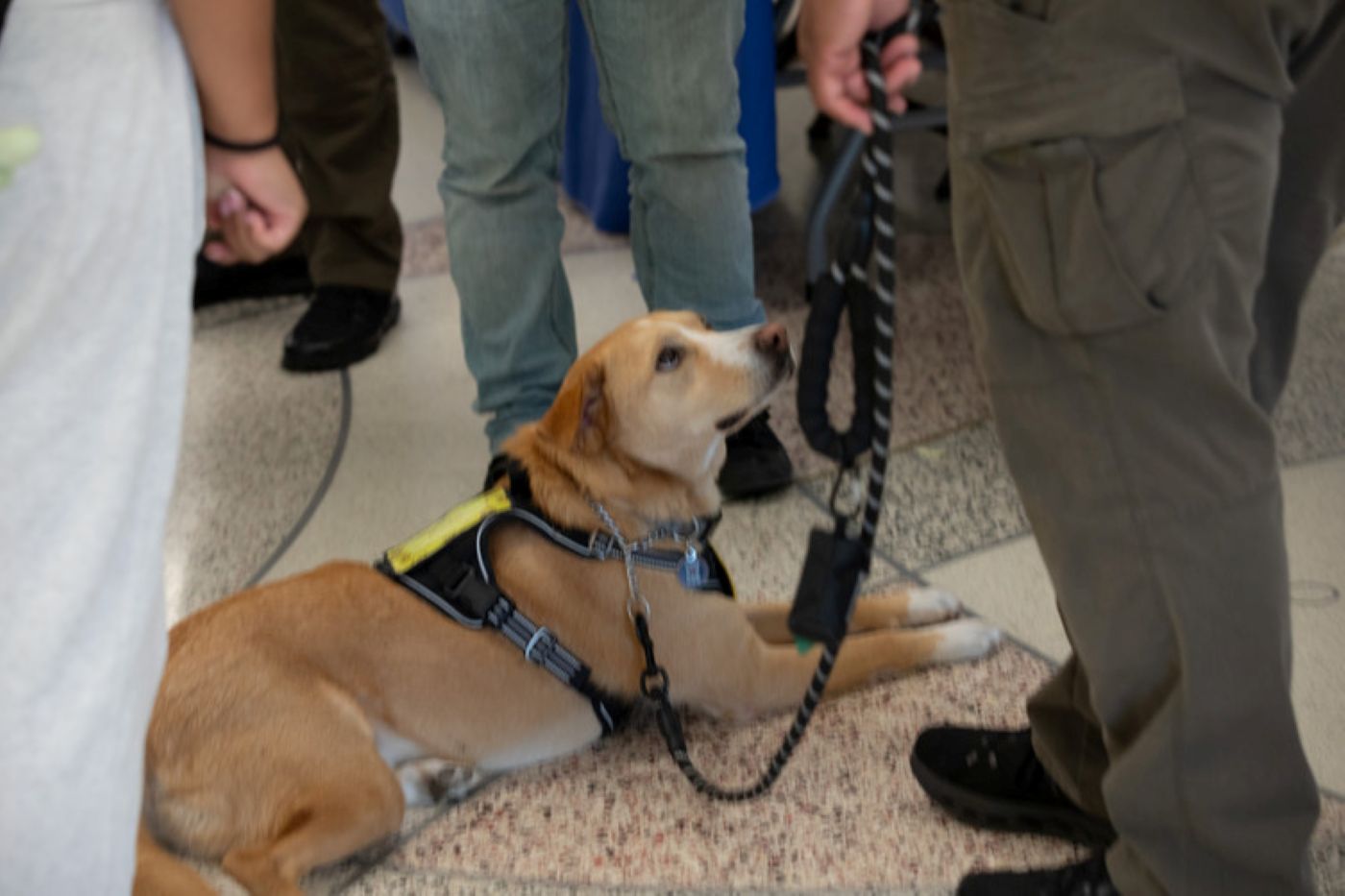
The events also feature a crowd favorite: Dunkin, the Bloomington Police Department's community support dog, who reliably draws students to the table.
"We joke that Dunkin is the real attraction," Kristin said.
Reflecting on her journey, Kristin wants students to know that uncertainty is not a weakness. In fact, it may be exactly where growth begins.
"You can change your mind. You can backtrack. You're not held to one choice," she said.
Too often, students feel pressured to have every detail of their future mapped out from the beginning.
"I think people get lost in questions like, 'What am I going to declare as my major?' or 'What classes should I take?’ If you keep moving forward, your path will unfold."
For Kristin, that path began with a young student who wasn't ready to leave home and didn't know what she wanted to do.
Today, she helps connect community members with life-changing resources, supports people through some of their most difficult moments, and serves as a trusted advocate for mental health and wellbeing. And it all started with a decision to take a chance on Normandale.
"If students have questions about mental health careers, social work, therapy, or any of the roles I've held throughout my career, I'm always happy to help," Kristin said.
Her story is a reminder that success doesn't always follow a straight line. Sometimes, the most meaningful journeys begin with uncertainty, a willingness to keep learning, and a college community that helps you discover what matters most.
 top